The recent proposal by some Australian politicians to tax unused bedrooms represents a troubling parallel to one of history’s most infamous tax policy failures: England’s Window Tax of 1696-1851. This comparison reveals a concerning pattern of poorly conceived taxation that demonstrates fundamental misunderstandings of human behaviour, economic incentives, and the proper role of tax policy in addressing complex social problems.
The Window Tax: A Historical Lesson in Policy Failure
England’s Window Tax was introduced in 1696 under King William III as what its creators believed was a progressive wealth tax – properties with more windows would pay more, reflecting greater affluence. The tax structure was complex and punitive, starting with houses having 10 or more windows and escalating dramatically for larger properties. By 1747, the system charged 6 pence per window for homes with 10-14 windows, 9 pence for 15-19 windows, and 1 shilling for 20 or more windows.
The results were catastrophic and entirely predictable. Property owners immediately began boarding up windows, building homes with minimal windows, and in some cases constructing entire floors without any windows at all. In Edinburgh, “a whole row of houses had been built without a single window in the bedroom story of any house”. The policy created severe public health consequences, as inadequately lit and ventilated homes became breeding grounds for cholera, smallpox, and typhus.
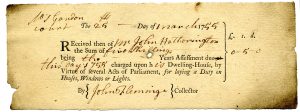
Academic research has demonstrated the Window Tax as a textbook example of how taxation can create devastating “excess burden” – economic harm far exceeding the revenue collected. The tax distorted behavior so severely that it reduced both the quality of housing stock and public health outcomes while failing to achieve its fiscal objectives.
Australia’s Modern “Bedroom Tax” Proposal
The current Australian discussion around taxing unused bedrooms eerily mirrors the flawed logic of the Window Tax. Recent analysis shows that over 60% of Australian households consist of one or two people, while three-quarters of homes have at least three bedrooms. This has prompted some policy experts to suggest implementing taxes or penalties on “spare” bedrooms to encourage more efficient housing utilization.
Eliza Owen from property research firm Cotality has suggested that “governments could make it more expensive to have more housing than needed” through land taxes or bedroom-specific charges. The proposal aims to address housing mismatches by forcing downsizing and freeing up larger homes for families.
However, this approach fundamentally misunderstands how people use housing and the complex reasons behind Australia’s housing crisis. As Owen herself acknowledges, spare bedrooms serve multiple legitimate purposes: home offices, spaces for future children, guest accommodation, and hobby rooms. The policy would effectively penalize normal life planning and family dynamics.
Lessons from the UK’s Recent “Bedroom Tax” Failure
Australia need look no further than the United Kingdom’s recent experience with a similar policy. The UK’s “bedroom tax,” officially called the Removal of Spare Room Subsidy, was introduced in 2013 for social housing tenants deemed to have spare bedrooms. The policy reduced housing benefits by 14% for one spare room and 25% for two or more.
The results were disastrous across multiple dimensions:
Policy Effectiveness: The policy failed to achieve its primary goal of encouraging downsizing. Only 6% of affected tenants moved in the first year, far below government targets. The shortage of smaller properties made downsizing impossible for most tenants.
Human Cost: Research documented severe impacts on mental health, family relationships, and community networks. The policy pushed vulnerable people deeper into poverty, with 50,000 households unable to pay for accommodation within months of implementation.
Fiscal Impact: Rather than saving money, the policy often increased costs as tenants moved to more expensive private rental accommodation or required additional support services.
Discrimination: The policy disproportionately affected disabled people, leading to successful court challenges. Even when the Supreme Court acknowledged the discrimination, it ruled the policy was “justified” due to resource constraints.
The Fundamental Flaw: Misdiagnosing the Problem
Both the historic Window Tax and modern bedroom tax proposals share a critical flaw: they attempt to solve supply-side problems through demand-side punishment. Australia’s housing crisis stems from decades of underinvestment in housing supply, restrictive planning laws, and inadequate infrastructure provision – not from people having spare bedrooms.
The proposals represent what economists call “government failure” – interventions that create more problems than they solve. As Australian Treasury analysis has noted, poorly designed taxes can change behavior in unintended ways, “put a hole in the tax base and end up with less than desirable outcomes”.
Research consistently shows that narrow-based taxes like bedroom charges are economically inefficient at any level. They discourage mobility, distort housing decisions, and impose high administrative costs while generating minimal revenue.
Better Policy Alternatives
If Australian policymakers are genuinely concerned about housing efficiency, evidence-based alternatives exist:
- Supply-Side Solutions: Accelerating housing construction through planning reform, infrastructure investment, and streamlined approval processes addresses the root cause rather than symptoms.
- Broad-Based Land Value Taxation: Unlike bedroom-specific charges, land value taxes don’t distort housing use decisions and are economically efficient.
- Facilitating Voluntary Arrangements: Clarifying tax and pension rules for older homeowners who might voluntarily rent spare rooms could unlock accommodation without coercion.
- Stamp Duty Reform: Removing barriers to downsizing by eliminating stamp duty would encourage voluntary mobility without punitive measures.
The Quality of Political Thinking
The emergence of bedroom tax proposals reveals a troubling quality of policy thinking among some Australian politicians. Like their 17th-century predecessors who created the Window Tax, these proposals demonstrate:
- Simplistic Solutions to Complex Problems: Reducing housing policy to bedroom counting ignores the multifaceted nature of housing markets and family needs.
- Behavioral Ignorance: Failing to understand how people actually use housing and respond to taxation incentives.
- Historical Blindness: Ignoring clear evidence from both distant and recent policy failures.
- Regressive Impacts: Disproportionately affecting vulnerable populations while failing to address underlying structural issues.
Conclusion
The bedroom tax proposal represents exactly the kind of poorly conceived policy that should concern Australians about the quality of political leadership. Like England’s Window Tax, it would likely create perverse incentives, harm vulnerable populations, and fail to achieve its stated objectives while generating significant unintended consequences.
If this represents the caliber of thinking being applied to Australia’s housing crisis, the country is indeed in trouble. Rather than pursuing punitive measures that have already failed elsewhere, policymakers should focus on evidence-based solutions that address supply constraints and remove genuine barriers to housing mobility. The ghosts of the Window Tax should serve as a warning: when politicians propose to tax basic human needs and living arrangements, the cure is almost certainly worse than the disease.
The lesson from history is clear – taxation designed to micromanage personal living arrangements inevitably fails, often spectacularly. Australian policymakers would be wise to learn from these failures rather than repeat them – or risk being ousted at the Polls.